Acqua di Parma marks its 110th year not with noise but with a quiet assertion of identity. The Maison has released a new cinematic campaign filmed in Parma, the city where Colonia was born in 1916, with Michael Fassbender and Sabrina Impacciatore as its central figures. The choice signals intent. Rather than unveil a crowded slate of products, the house is foregrounding the values that built its reputation: refinement, simplicity and the belief that living well is an art. The pacing is unhurried, and the beauty of Italy is allowed to surface layer by layer, as promised.
Directed by the British filmmaker Talia Collis and photographed by Brett Lloyd, the project unfolds across six episodes and a feature video. The focus, according to the Maison, is on small rituals and gestures, the kind of movements that define a day without calling attention to themselves. You can feel the emphasis on touch and intention in the way the campaign is described, where the eye settles on the human hand and the detail of well-made objects rather than spectacle. The tone is calm, more pianissimo than crescendo, which suits a brand that has long prized quiet distinction.
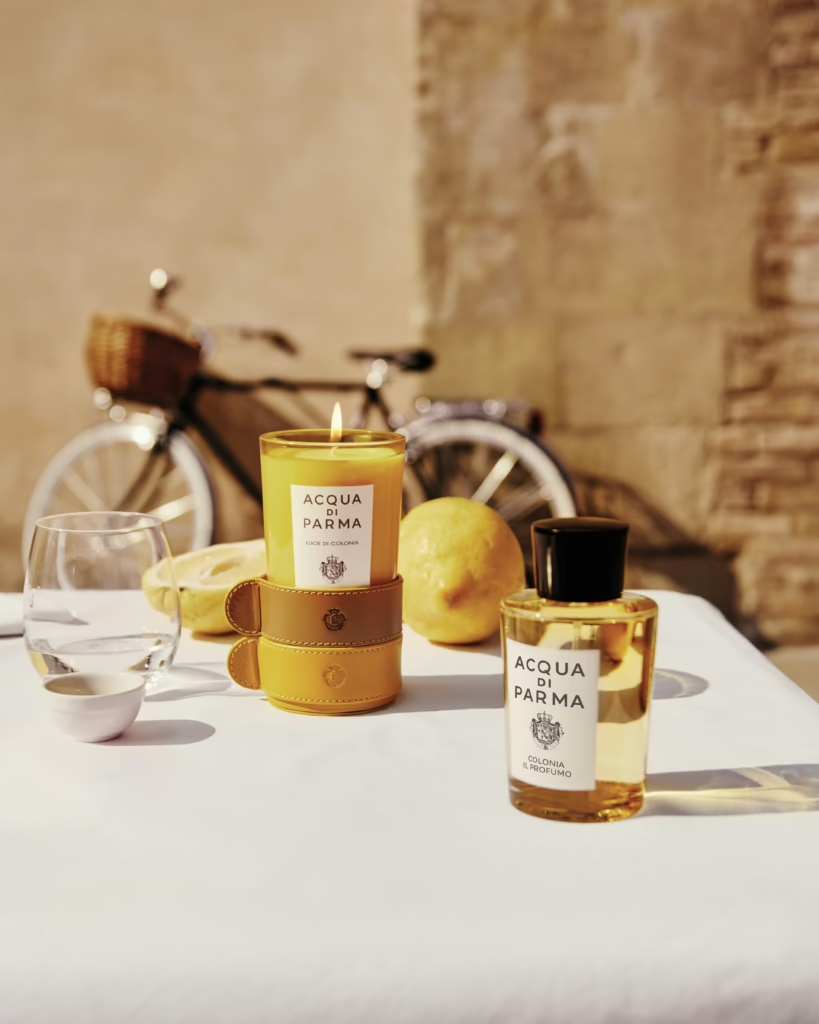
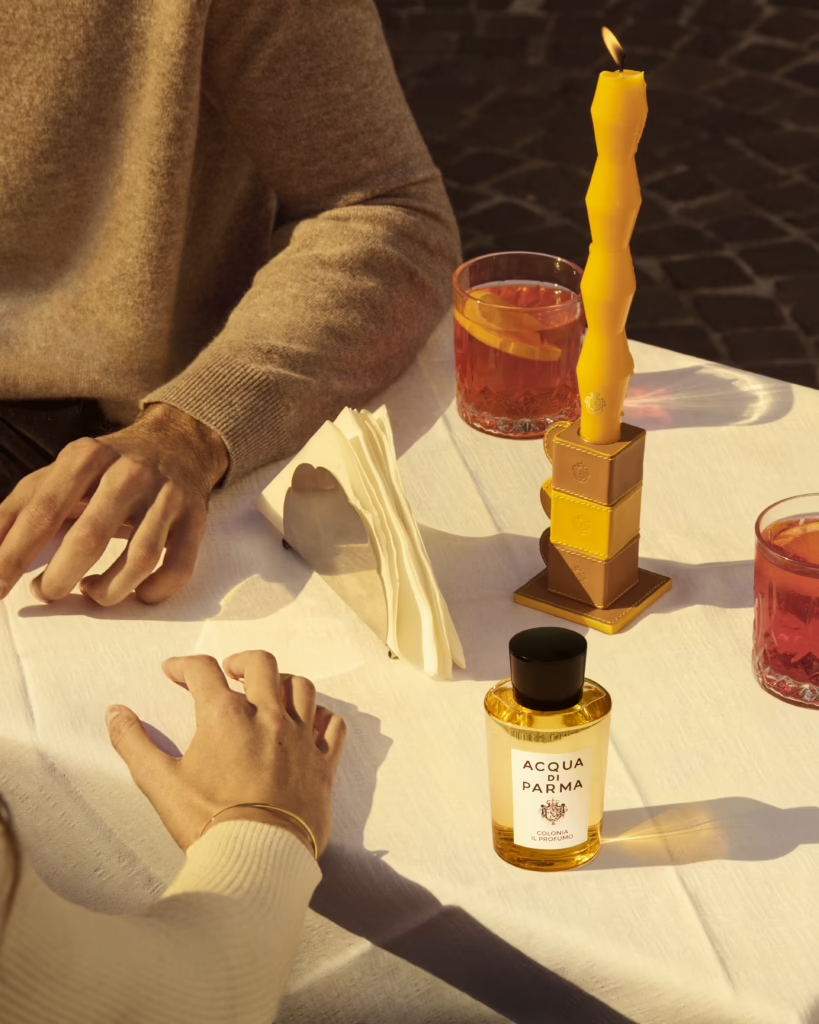
Casting is deliberate. Fassbender brings a controlled presence that reads as timeless without being antique. Impacciatore anchors the Italian perspective with authenticity rather than cliché. Together they form a dialogue between elegance and ease, suggesting that sophistication is something you practice, not perform. In a market that still leans on big gestures, the campaign’s stillness feels purposeful. Think of the way natural light softens a room in late afternoon, or how a steady breath steadies a wrist. The imagery aims for that register.
Set in Parma, the film returns the narrative to source. The city’s role is more than backdrop; it is context for the brand’s long-standing conversation with Italian craftsmanship. Acqua di Parma stresses a tradition that places the individual at the center, in collaboration with designers, artisans, perfumers and creative talents. That ethos comes through in the Maison’s language around human touch and the quiet distinction of well-made objects. You can almost hear the gentle slide of a drawer, the faint clink of glass on wood. Nothing is rushed.
The creative team also situates the campaign firmly in the present. Heritage is not presented as nostalgia but as continuity adapted to now. The Maison speaks of giving its legacy a contemporary twist while preserving a timeless dimension, which is a useful frame for an audience that knows the difference between classic and dated. That the project spans episodic films and a feature cut is telling. It meets modern viewing habits without surrendering to them, allowing the story to breathe while still being modular enough for today’s platforms.
From a cultural standpoint, this is a clean counterpoint to the maximalist churn that has defined much luxury communication in recent years. Fragrance campaigns are often all strobe and declaration. Acqua di Parma chooses the opposite tack, betting on patience, atmosphere and the appeal of craft. The tagline is not stated, but the message is clear: refinement and simplicity are one, and joy requires no justification. For the modern gentleman, the takeaway is practical. Good taste is not louder, newer or more complicated. It is consistent, considered and built on the right rituals.
It is also worth noting what the campaign does not do. It does not announce a new fragrance. It reframes the house’s icons, with Colonia as the implied lodestar, and reminds viewers why these objects mattered in the first place. In a year of round-number anniversaries across the industry, this restraint reads as confidence. The brand is not chasing novelty for its own sake. It is protecting an idea.
Acqua di Parma’s 110th feels well judged. By returning to Parma, enlisting talents who understand economy of expression and structuring the work around episodes that reward repeat viewing, the Maison makes a case for l’Arte di Vivere that extends beyond scent. The campaign invites you to slow your cadence and pay attention to texture, light and intent. That is a relevant lesson in 2026, and it suits a house that has always preferred clarity over volume.
More about style here
