The new MacBook Pro has arrived, and the real story is not about speed. For years, the conversation around artificial intelligence has been about the cloud. It has centered on vast, remote servers processing immense amounts of data. Apple’s latest machines propose a different path, one where the most demanding cognitive work happens right on your desk, with no network cable required.
At the center of this idea are the new M5 Pro and M5 Max chips. The performance numbers are significant, of course. Apple points to a fourfold increase in AI processing compared to the last generation. But the numbers are less important than what they are for. This is silicon designed for a specific purpose. It is built to run complex Large Language Models directly on the device, moving the engine of modern AI from the data center to the laptop itself.
This represents a quiet but meaningful shift in philosophy. When a machine can handle these tasks locally, the user’s relationship with it changes. It becomes less of a terminal connected to a remote brain and more of a self-contained partner. The implications for privacy, speed, and creative autonomy are considerable.
A Different Measure of Power
For a long time, progress in computing was measured in straightforward benchmarks. The M5 architecture suggests a new focus. It features a redesigned CPU and a next-generation GPU, but the crucial update is the inclusion of a dedicated Neural Accelerator in each core. This is specialized hardware for a specialized task. It is less about doing everything faster and more about doing one very important thing, AI processing, exceptionally well.
The rest of the system is built to remove any surrounding friction. The internal SSDs are twice as fast, with storage now starting at a more realistic 1TB for Pro models and 2TB for Max configurations. Connectivity gets a similar revision, with a new Apple-designed N1 chip enabling Wi-Fi 7 and the introduction of Thunderbolt 5 for faster data transfer. As publications like Hypebeast have noted, these are not isolated upgrades. They work together to create a machine that is less dependent on external resources.
The Self-Sufficient Studio
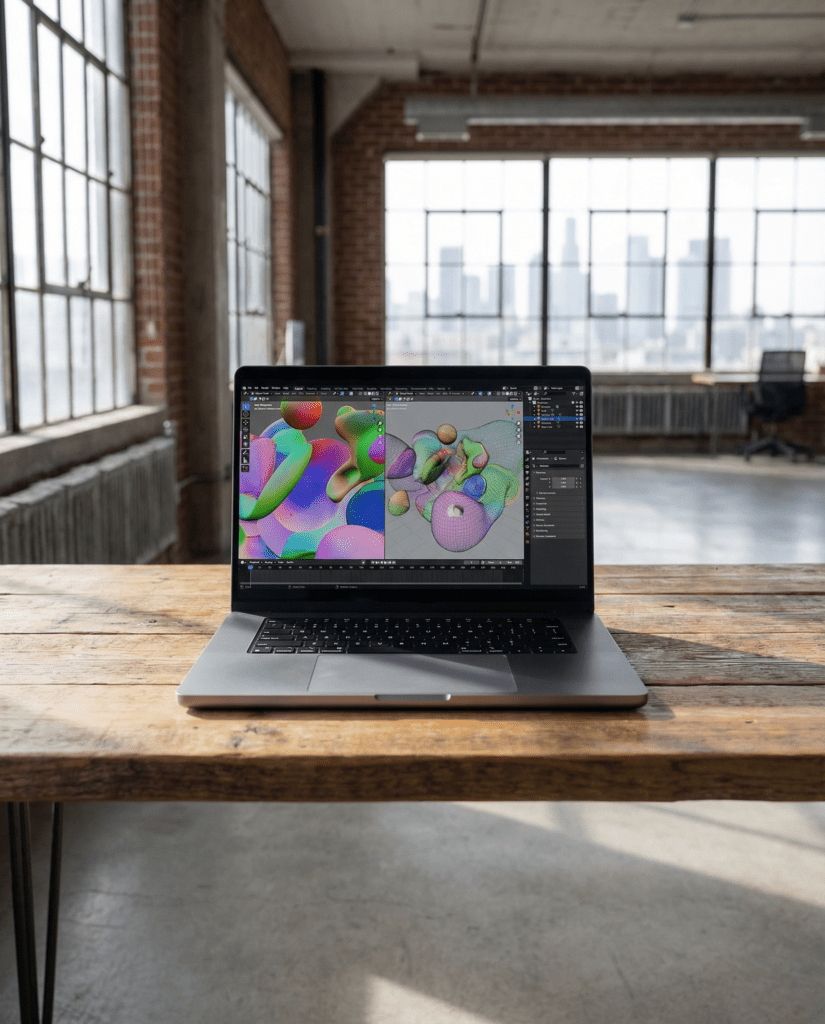
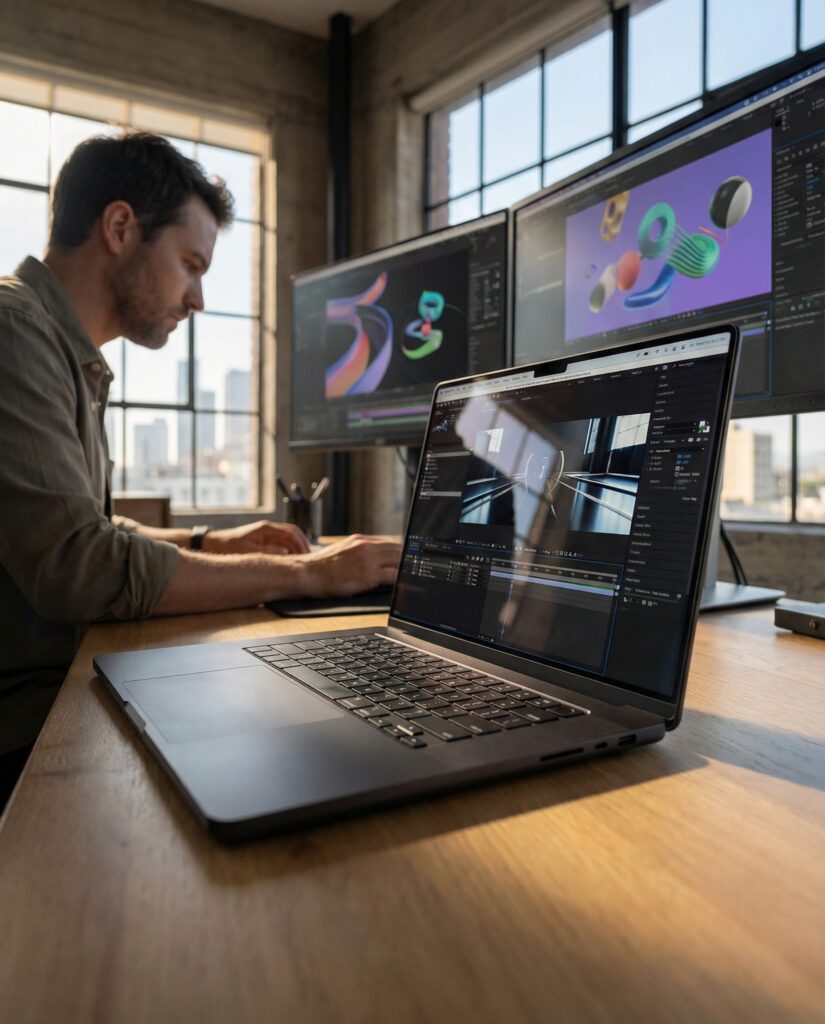
The result is a laptop that functions more like a self-sufficient studio. For a developer, creative, or researcher, the ability to work with powerful AI tools without a persistent internet connection is a practical advantage. It makes the MacBook Pro a more resilient and versatile instrument. Elements like the Liquid Retina XDR display, the 12MP camera, and the six-speaker sound system are not just features on a list. They complete the idea of a portable workstation that compromises on very little.
With this release, Apple is making a clear statement about the future of professional work. The most powerful tool may no longer be the one that simply connects to the smartest cloud. It might be the one that has its own intelligence built right in. It is a subtle re-framing of what a personal computer is meant to be.
Read more about tech here.